
A product can be vegan without being a sugar paste, and sugaring can be vegan-friendly without being a conventional wax.
As a founder who has spent years working with natural hair-removal methods in Richmond, I’ve noticed that people often use vegan wax, sugaring and organic wax as if they mean the same thing. They don’t.
The first thing I suggest is looking past the label and asking what the product contains and how it is used.
What does “vegan wax” mean?
It means the product is made without animal-derived ingredients; it doesn’t necessarily mean it is made only from plants.
Some vegan waxes use plant-derived waxes such as carnauba, candelilla, soy or sunflower. Others may include synthetic resins. The word vegan describes the ingredients’ animal-free status, not one specific formula or method.
If you’re checking a product, ask the studio for its ingredient list and whether the manufacturer confirms it is vegan. Beeswax, for example, is animal-derived, so a product containing it would not be vegan under The Vegan Society’s definition.
Is sugaring a vegan-friendly wax?
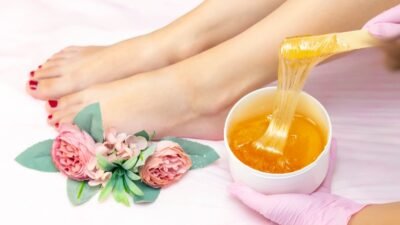
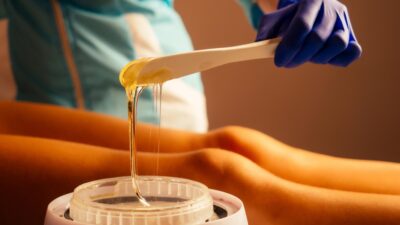
Sugaring is often vegan-friendly, but it is more accurately described as a sugar paste than a wax.
A traditional sugar paste is made with sugar, water and lemon juice. Those ingredients are plant-based, but formulas can vary, so it’s sensible to check with the studio if vegan ingredients are important to you. Sugaring and waxing are also different in how they’re applied and removed.
How are sugaring and vegan waxing different?
They can both be vegan-friendly, but their formulas, application and cleanup differ.
| Feature | Sugaring | Vegan Waxing |
| Typical base | Sugar, water and lemon juice | Plant-derived waxes, synthetic resins or a blend |
| Temperature | Often used at room temperature or gently warmed, depending on the paste and technique | Usually warmed before application; temperature depends on the product |
| Application and removal | Commonly applied against hair growth and removed with hair growth | Often applied with hair growth and removed against it; follow the product and practitioner’s technique |
| Skin contact | The paste is water-based and can adhere to hair and some skin cells | How it adheres to skin and hair depends on the formula and type of wax |
| Cleanup | Water-soluble and generally rinses off with water | Often needs oil or a product recommended by the manufacturer |
These are general distinctions, not a promise that one method will feel better for everyone. Technique, the product, the treatment area and individual skin can all affect the experience.
Is vegan wax the same as organic wax?
No. “Vegan” and “organic” describe different things.
Vegan refers to whether animal-derived ingredients are used. Organic refers to how certain ingredients are grown or produced, according to the relevant standards or certification. A product might be vegan, organic, both or neither. A label alone may not tell you the full story, so ask what it means for that particular product.
At Shortpump Threading, we offer sugaring alongside other hair-removal options. Our public FAQ lists both organic wax and sugaring; those terms refer to different options and shouldn’t be treated as interchangeable.
Is there a fully vegan-only wax studio in Richmond?
I can’t confidently identify a Richmond studio that publicly describes itself as exclusively vegan-only.
Many studios offer more than one hair-removal method, and public service menus don’t always list every product ingredient. That makes it difficult to confirm a studio’s full product range from its website alone. If you’re looking for a fully vegan-only studio, ask whether all waxes and related products used during your appointment are free from animal-derived ingredients.
At Shortpump Threading, we offer vegan-friendly sugaring, but we also offer other services and wax options. We are not a vegan-only studio. You can read about our approach to threading, waxing and sugaring in Richmond.
What should I ask before booking vegan-friendly hair removal in Richmond, VA?
Ask about the exact product and the studio’s full treatment process.
You could ask:
- Is the specific product used for my service vegan?
- Does it contain beeswax, honey or other animal-derived ingredients?
- Can I review the product’s ingredient information?
- Are any aftercare products used during the appointment also vegan?
- Which hair-removal method and technique do you recommend for my treatment area?
Those questions help you make a choice based on the product and service you’ll actually receive.
FAQs
Is sugaring always vegan?
No; traditional sugar paste is usually made with plant-based ingredients, but formulas can vary. Ask the studio about the specific product.
Does “plant-based” always mean vegan?
Not necessarily. “Plant-based” may describe some ingredients without confirming that every ingredient is free from animal derivatives. Check the full formula or ask the manufacturer.
Is vegan wax gentler than sugaring?
The label alone can’t tell you that. Formulation, technique, treatment area and individual skin all matter. A professional can discuss the method and any relevant skin concerns before treatment.
Can a wax be both organic and vegan?
Yes. The labels describe different qualities, so a product can meet both descriptions if its ingredients and sourcing qualify.
Where can I learn more about Shortpump Threading’s services?
Visit the Shortpump Threading website or read the studio’s sugaring information. Please feel to talk to us at 804 512 2835 for queries or questions.